Eat n' Log
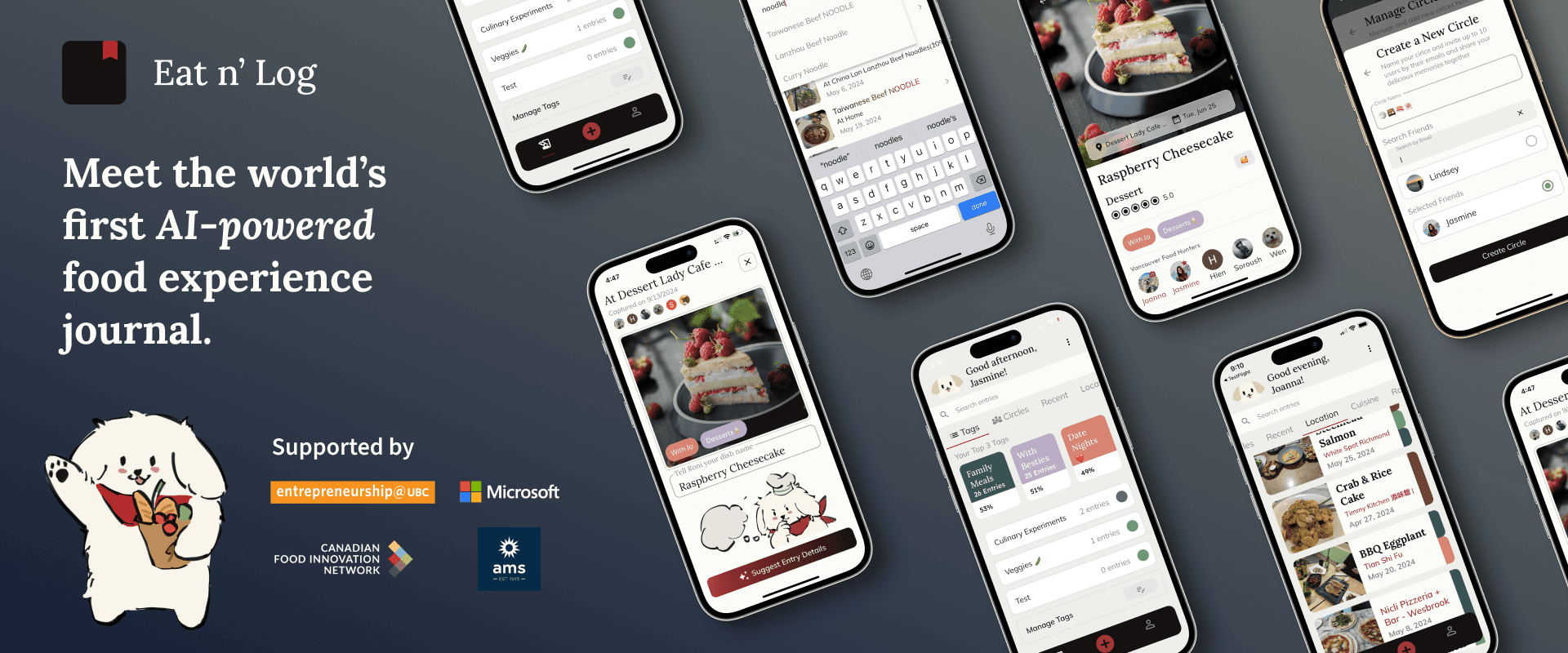
Eat n' Log is an AI-enhanced food experience journaling app — built, designed, and shipped to the App Store by me, from idea to launch.
Timeline
2021–2024
Company
Eat n' Log Technologies Inc
Role
Founder, Product Designer, Product Manager, eventual sole developer
Teams
Up to 14 at peak — 7 developers, 4 marketers, me as founder / PM / lead designer
Research
Brand Strategy, UX/UI Design
Tools
Figma, Maze, React Native (alpha), FlutterFlow + Firebase (beta), Google Maps API, ChatGPT API
Outcome
Shipped to App Store. NPS improved 140% from -38.5 to 16.3. Task completion improved from 0% to 42.9%. Recognized by UBC Innovative Project Fund Grant, AcceleratedIP, and Microsoft for Startups
PROBLEM
During the COVID lockdown I found myself with thousands of food photos that captured nothing — no context, no flavor, no memory of who I was with or how it tasted.
69% of millennials and 50% of Americans photograph food before eating. The behavior existed at scale. The tool to make it meaningful didn't.
I wasn't going to build on personal frustration alone. I went to users first.
🖼 [SIDE BY SIDE] Generic camera roll full of food photos on the left, an Eat n' Log entry with flavor profile, location, and context on the right
RESEARCH
6 user interviews, Summer 2021 — food lovers aged 22–35, casual diners and enthusiasts. Then accepted into Entrepreneurship@UBC Venture Founder program in Fall 2022, where I conducted 50 additional market interviews and sized the market using both top-down and bottom-up approaches.
🃏 [3 CARDS SIDE BY SIDE] Card 1: INSIGHT 1 / Food photos alone felt insufficient. / Users wanted context alongside the image — location, company, atmosphere. The photo was never the full story. Card 2: INSIGHT 2 / Users were stitching experience journaling across 3+ tools. / Notes app for reflections, camera roll for photos, Google Maps for location. No single place held the full experience. Card 3: INSIGHT 3 / The food app category had a blind spot. / Every existing app was either restaurant discovery or calorie tracking. Nothing existed for experience journaling.
🖼 [PROCESS ARTIFACT] Interview insights summary — key quotes from the 6 participants
🖼 [FULL WIDTH] Competitive landscape map — showing the restaurant-discovery / calorie-tracking gap where Eat n' Log sits
"Running my first round of interviews after months of private ideation, I learned something uncomfortable: conviction and research aren't the same thing. I was certain users wanted this. The research happened to agree — but I hadn't earned that certainty until the data came in."
DESIGN & USABILITY TESTING
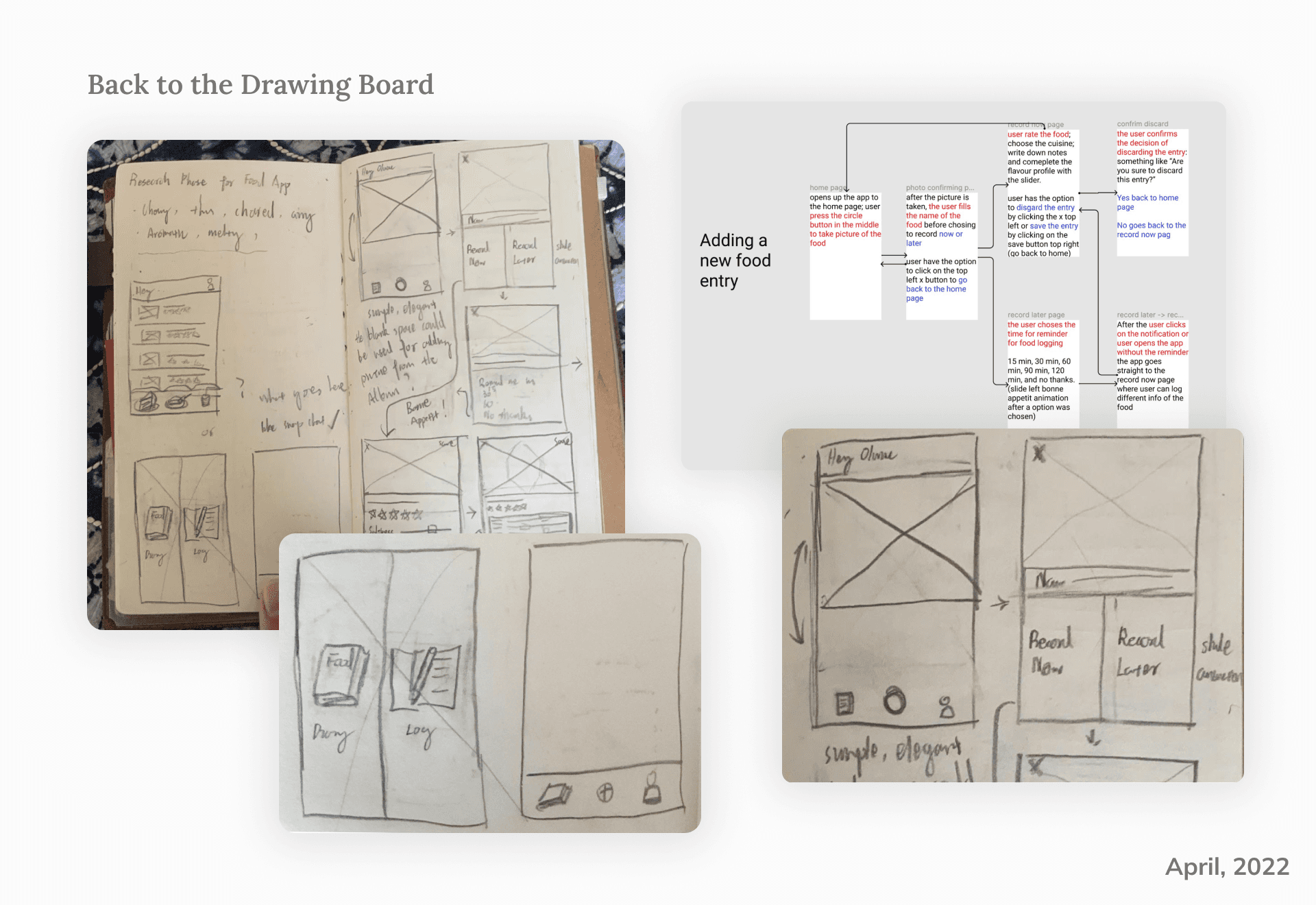
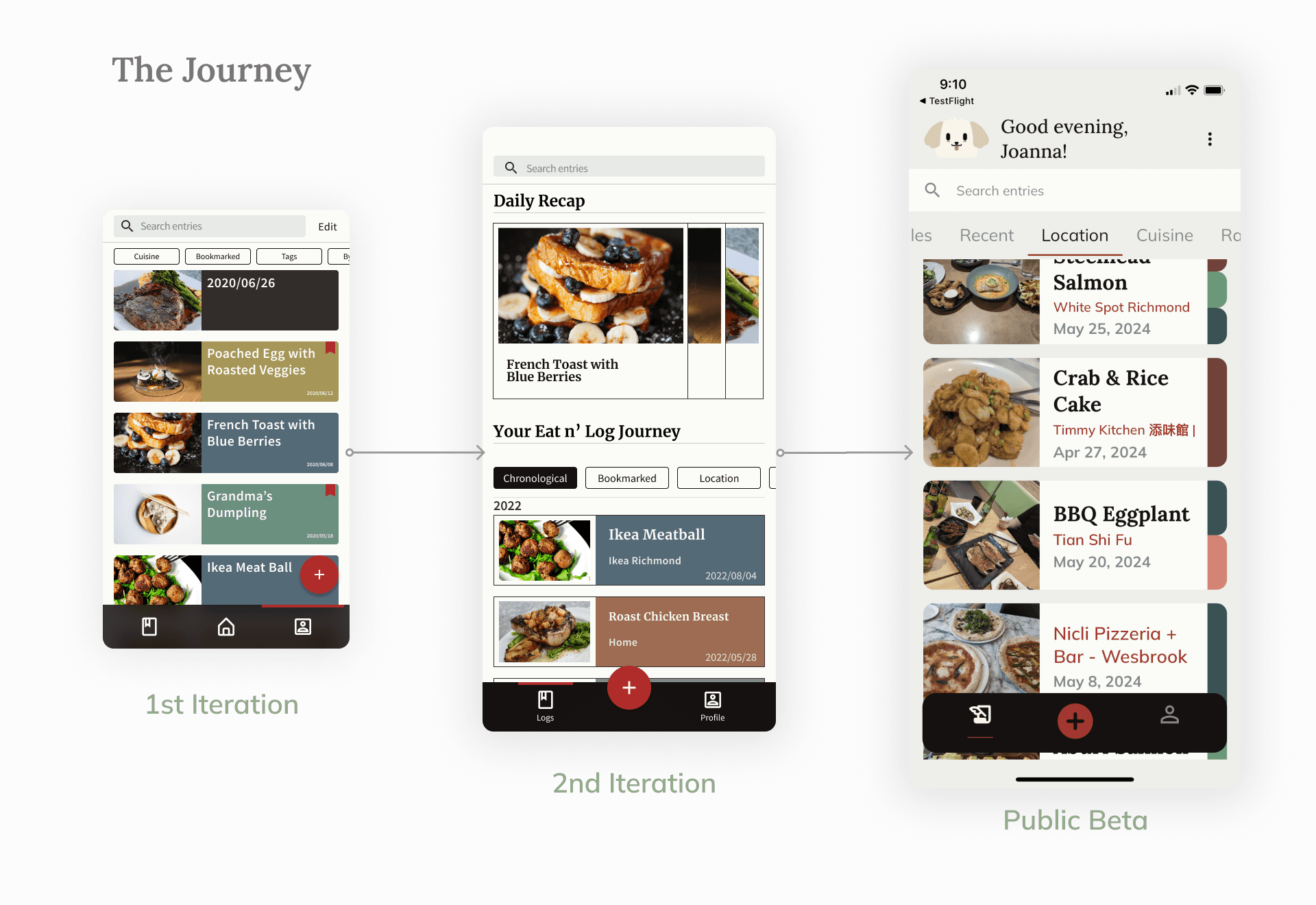
Lo-fi paper sketches → mid-fi Figma prototypes, focused on making entry creation fast and intuitive. Then the first usability test hit.
🃏 [2 CARDS SIDE BY SIDE — OPTION A / OPTION B] Card 1: USABILITY TEST 1 / 0% task completion — a structural failure. / Nobody finished the entry flow. Not a nuance — a fundamental IA problem. Card 2: USABILITY TEST 2 / 42.9% task completion — significant improvement. / Structure was no longer the blocker. Still work to do, but the foundation was fixed.
🃏 [SINGLE CARD — KEY DECISION] KEY DECISION: Rebuilt the entry creation IA from the ground up USER VALUE — Removed the navigation complexity causing 100% drop-off. Increased font sizes from 8px → 16px for accessibility. BUSINESS VALUE — Without task completion there is no retention. Without retention there is no product. Fixing IA was existential.
🖼 [PROCESS ARTIFACT] Paper sketches — one page, unpolished 🖼 [SIDE BY SIDE] Iteration 1 screens vs iteration 2 screens — showing the IA change 🖼 [SIDE BY SIDE] Maze test results — 0% and 42.9%
"Running my first round of interviews after months of private ideation, I learned something uncomfortable: conviction and research aren't the same thing. I was certain users wanted this. The research happened to agree — but I hadn't earned that certainty until the data came in."
CROSS-FUNCTIONAL LEADERSHIP
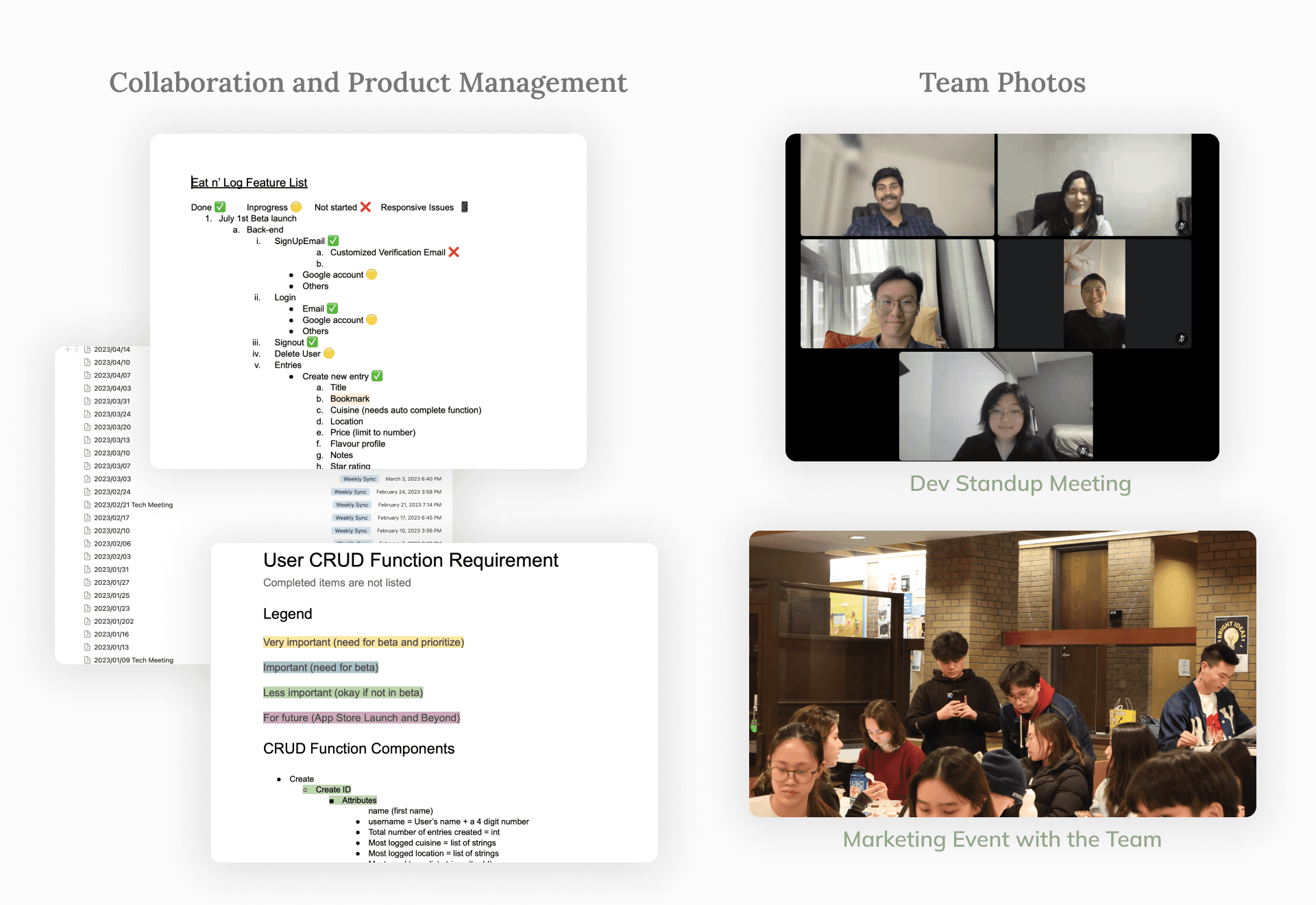
Weekly standups in Discord, product backlog in Notion, Git coordination across 7 developers. Directed React Native implementation across all core flows. Provided UX sign-off before every release. Launched an Instagram campaign to seed the alpha user base.
At different points, two co-founders exited the project. I made the decision to continue alone.
🖼 [PROCESS ARTIFACT] Team structure diagram — showing the 14-person org at peak 🖼 [PROCESS ARTIFACT] Notion backlog or Discord sprint board — keep it real, not polished 🖼 [SUPPLEMENTARY] Instagram campaign — one or two marketing visuals
"The hardest part of leading a team was accepting that design decisions could not always be perfect — sometimes they had to be decisive. A wrong-but-shipped call beat a right-but-late call more often than I expected."
THE PIVOT DECISION
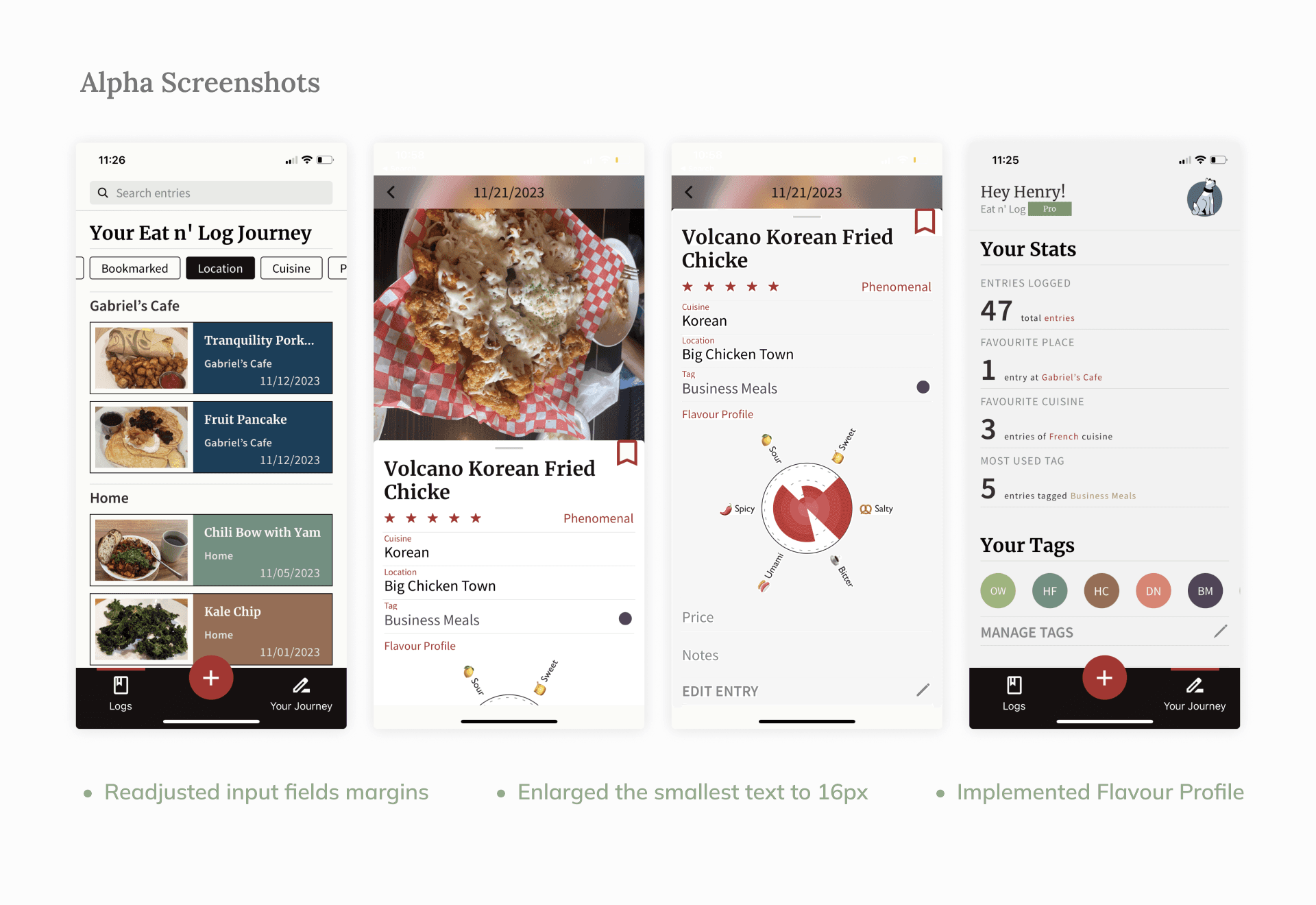
Alpha results, Spring 2023: USE 3.5/5, NPS -38.5. Users described the entry process as "filling out a survey." Entries intermittently failed to save.
🃏 [2 CARDS SIDE BY SIDE — OPTION A / OPTION B] Card 1: OPTION A / Patch the React Native app. / Months of work existed and the team was still partially intact. Rejected — manual entry was the root cause, not the UI. Patching surface wouldn't fix a structural problem. Card 2: OPTION B — CHOSEN / Rebuild from scratch, solo, in FlutterFlow with AI at the core. / NPS pointed directly at manual entry as the failure point. AI-assisted entry would eliminate the "survey" problem entirely. Tradeoff: teach myself FlutterFlow and Firebase, and execute alone.
🖼 [FULL WIDTH] Alpha screens — the version that produced NPS -38.5, shown honestly 🖼 [SINGLE] NPS / USE data visualisation — -38.5 shown prominently as the decision trigger
SOLO REBUILD & BETA
🃏 [3 CARDS SIDE BY SIDE — KEY DECISIONS] Card 1: KEY DECISION: Auto location detection (Google Maps API) / USER VALUE — Removed the most repetitive field from the entry flow. / BUSINESS VALUE — Cut average entry-creation time, directly addressing the "survey" complaint that drove NPS down. Card 2: KEY DECISION: AI-driven flavour suggestions (ChatGPT API) / USER VALUE — Users edit suggestions instead of articulating flavour from scratch. Lower cognitive cost, more complete entries. / BUSINESS VALUE — No competitor in food journaling had AI integration at this depth. A real differentiator. Card 3: KEY DECISION: Roni — a personified AI gourmet-dog assistant / USER VALUE — Made the entry process feel like a conversation, not a form. / BUSINESS VALUE — Brand distinctiveness in a photo-first category. Memorable, reviewable, mentionable.
🃏 [2 CARDS SIDE BY SIDE — METRICS] Card 1: ALPHA → BETA / USE: 3.5 → 4.2 / 20% improvement Card 2: ALPHA → BETA / NPS: -38.5 → 16.3 / 140% improvement, reaching B2C industry standard
🖼 [FULL WIDTH] Beta screens — final UI featuring Roni 🖼 [SINGLE] Roni character design — the AI persona 🖼 [SINGLE] NPS / USE comparison chart — -38.5 → 16.3 shown visually
SHIPPING & THE TIM COOK MOMENT
Apple rejected the app under Guideline 4.3(a) — flagged as a spam clone despite being a genuinely new category. I diagnosed it as a categorisation error. Found Tim Cook's office email. Wrote directly — explaining the product, the category, and the misclassification.
Apple called within 48 hours and personally assisted with publishing. The app went live. Featured on Product Hunt.
🖼 [SINGLE] Tim Cook email — cropped screenshot showing the opening and key argument 🖼 [SINGLE] App Store listing — live product 🖼 [SINGLE] Product Hunt badge
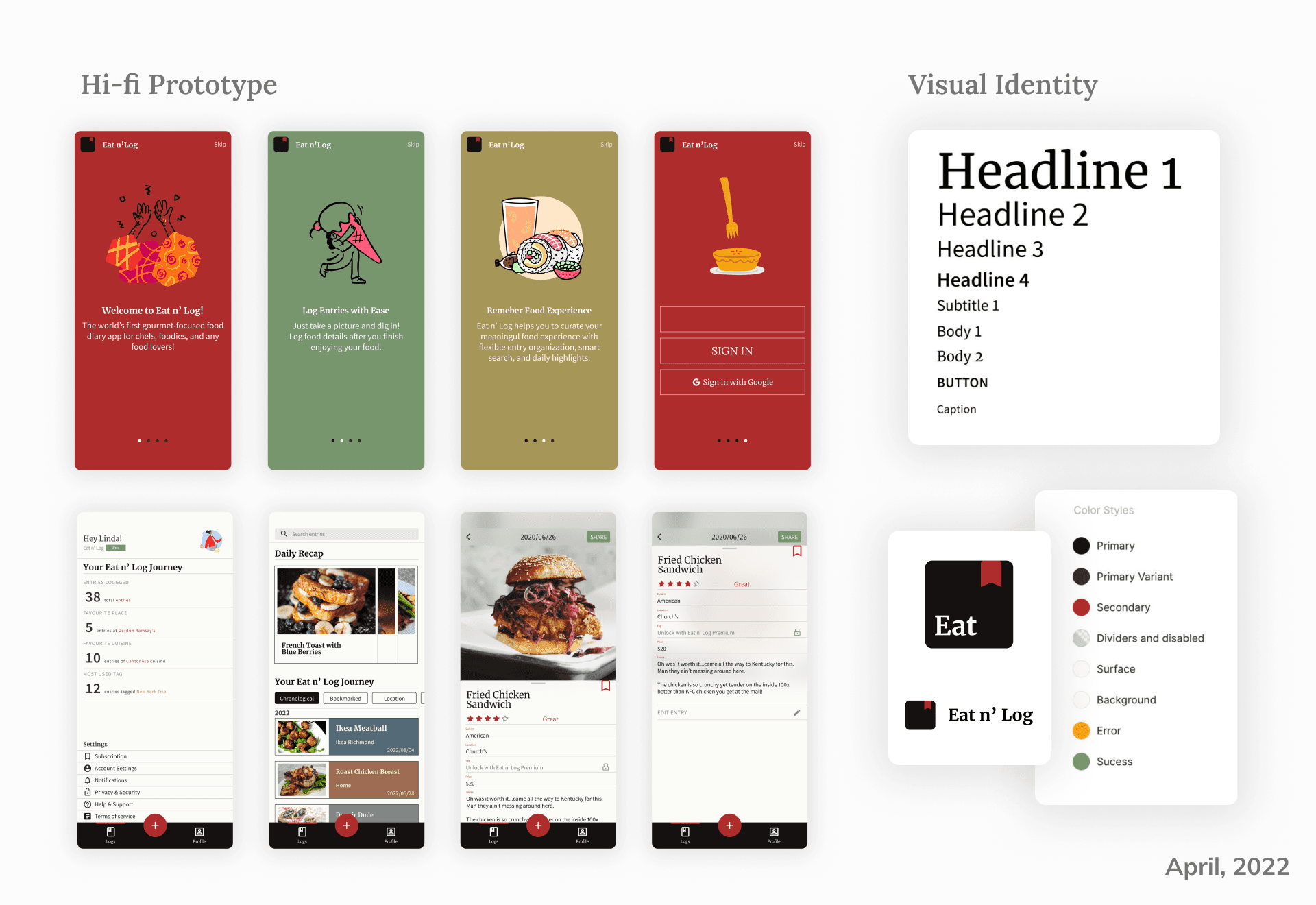
VISUAL IDENTITY
Making AI feel like a conversation rather than a form required a character, not a chatbot interface.
🃏 [3 CARDS SIDE BY SIDE] Card 1: Color palette — 3–4 swatches from the final beta version Card 2: Typography pairing — headings and body, one clean specimen Card 3: One UI component — the Roni conversation flow showing the AI interaction pattern
🖼 [FULL WIDTH] Roni character — the AI persona in full context
REFLECTION
In the alpha I had opinions about what was wrong — the survey feeling, the save bugs, the friction. The NPS of -38.5 ended the debate. Without that number I could have patched for months. With it, the rebuild was obvious. I carry this forward: measure first, argue second. Design intuition is faster when it's grounded; slower and less credible when it's untested.
What I'd measure if reopened:
Week-2 retention — the single hardest bar for journaling apps
Hypothesis: if entry-creation time drops below 45 seconds, week-2 retention lifts above 20%
Trigger: if retention stays flat, investigate onboarding depth rather than entry speed
"The product I'm proud of isn't the user base — it's the NPS swing, the Tim Cook email, and the fact that the app is live at all after two co-founder exits."